Growing Baseball’s Business With AI Post-Event Summary
Growing Baseball’s Business with AI
September 9th Event Recap
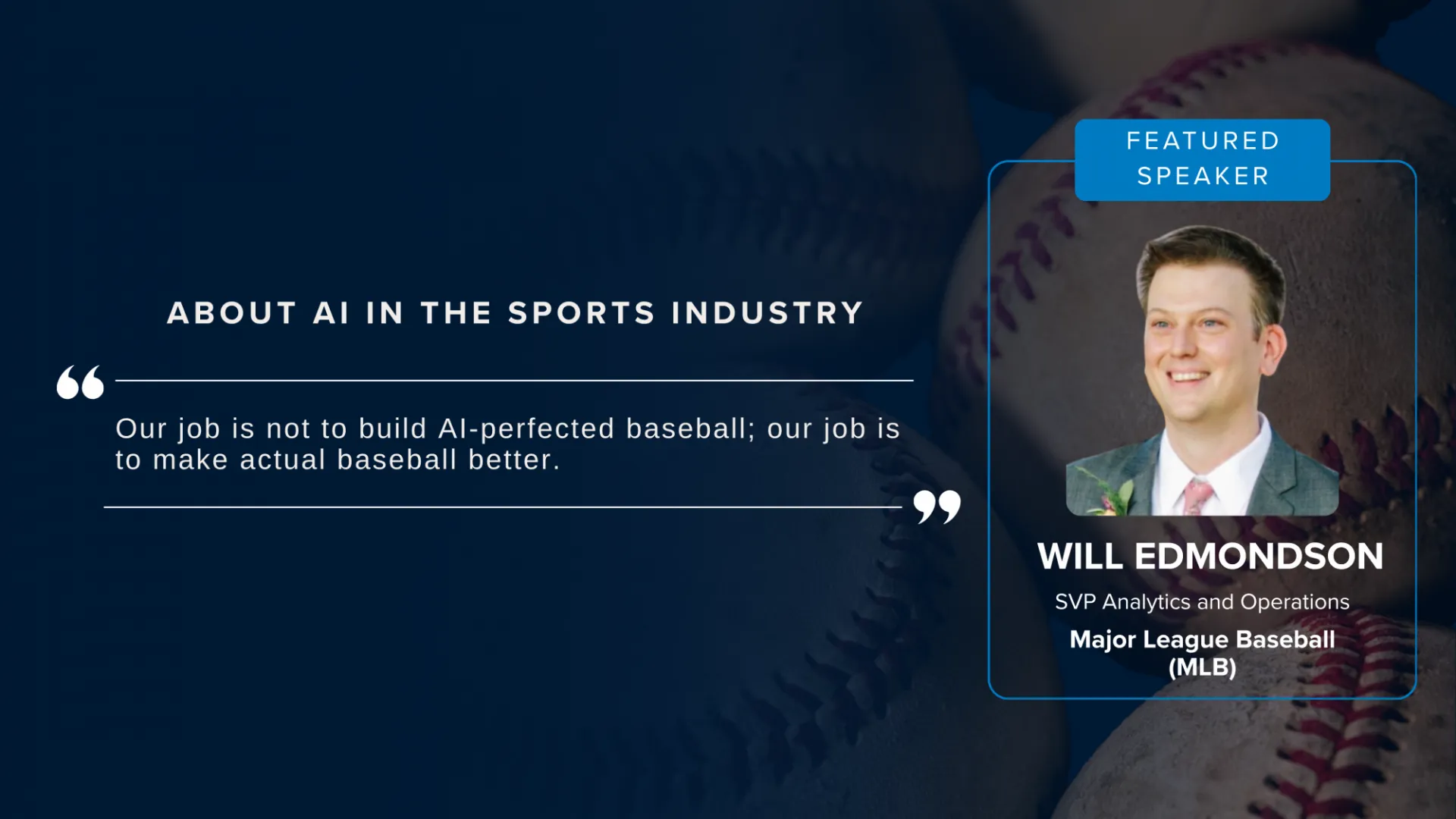
Columbia’s Data Science Institute launched its inaugural Data Science and AI Exchange (DAX) INSIGHTS forum on September 9th at Columbia University. It was the first of nine series of events the Institute will host this academic year. These forums will highlight the challenges and opportunities AI is creating across various sectors, putting industry and academia in conversation. Will Edmondson, Senior Vice President of Analytics and Operations at Major League Baseball (MLB), was the featured industry speaker. He explained the business analytics side of baseball, and how AI is helping him share data across MLB and local baseball clubs nationally.
Edmondson explained how MLB is actively exploring a range of ways to deploy comprehensive AI models across its operations to deepen fan connections and enhance the overall experience. That work includes social media initiatives designed to leverage metadata and audience insights to better understand fans, drive deeper engagement, and deliver content aligned with their interests. He also highlighted an AI agent being developed for MLB’s local club partners, enabling them to more easily surface answers and insights across the diverse datasets MLB collects.
Image Carousel with 7 slides
A carousel is a rotating set of images. Use the previous and next buttons to change the displayed slide
-
Slide 1: DAX INSIGHTS Growing Baseball’s Business With AI event photos
-
Slide 2: DAX INSIGHTS Growing Baseball’s Business With AI event photos
-
Slide 3: DAX INSIGHTS Growing Baseball’s Business With AI event photos
-
Slide 4: DAX INSIGHTS Growing Baseball’s Business With AI event photos
-
Slide 5: DAX INSIGHTS Growing Baseball’s Business With AI event photos
-
Slide 6: DAX INSIGHTS Growing Baseball’s Business With AI event photos
-
Slide 7: DAX INSIGHTS Growing Baseball’s Business With AI event photos


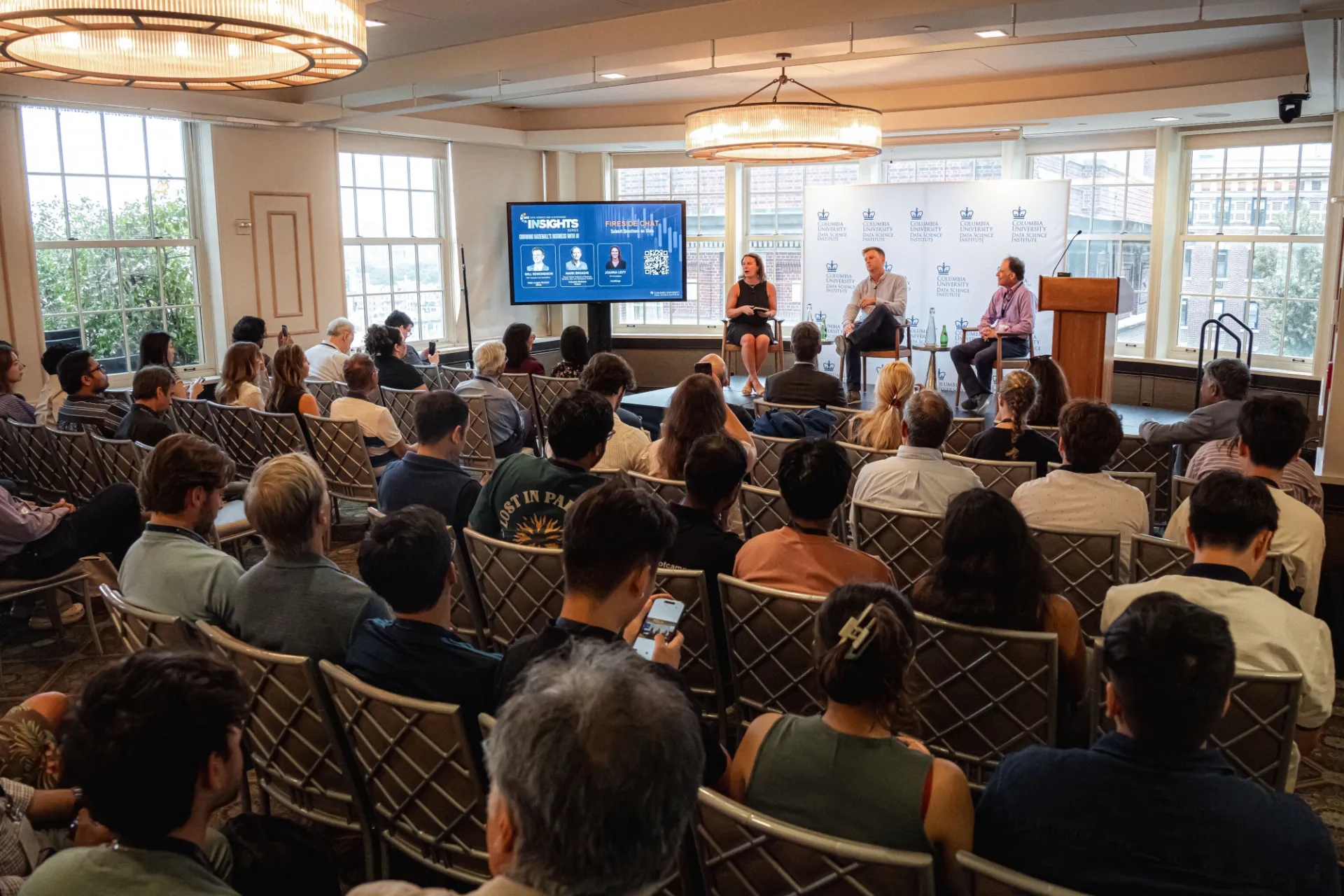

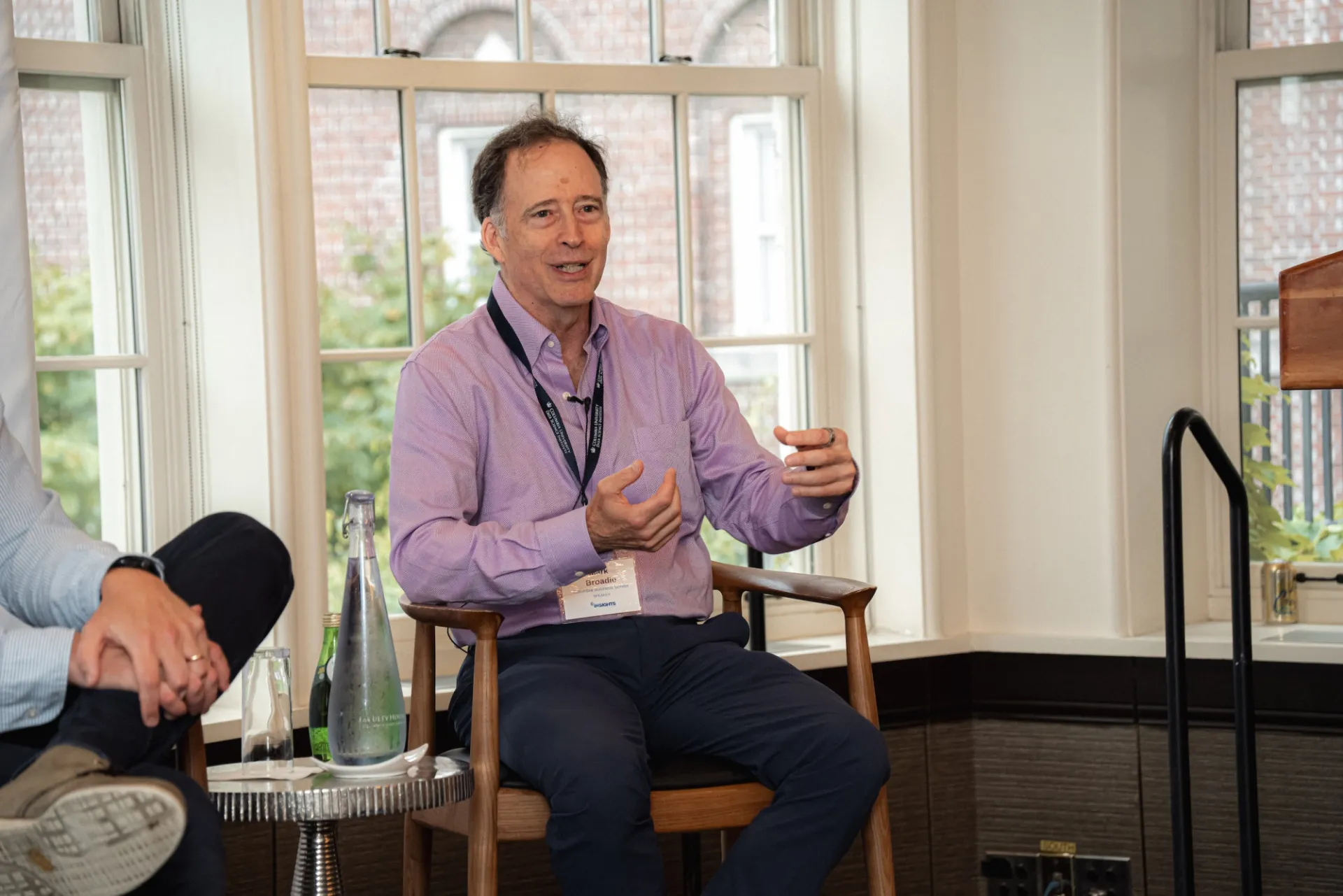

The second half of the event was a moderated panel conversation with Will Edmonson and Mark Broadie, Carson Family Professor of Business Decision, Risk, and Operations Division of Columbia Business School, moderated by Joanna Levy, Vice President of Analytics at DraftKings, and a lecturer in Sports Management at Columbia’s School of Professional Studies. They spoke about the future of AI in sports analytics, and how students could implement AI in their learning.
Edmondson explained that AI, including those used by MLB, can perform many of the calculations that the league needs. It can even bridge different data sets, and provide faster results. However, in his experience, the first part of data analysis is understanding what the client is really asking for, and AI struggles with this. AI can supplement his work, but cannot replace human intelligence.
Broadie highlighted the growing role of AI in advancing professional sports, drawing on his expertise in analytics, performance optimization, and data-driven decision-making, and pointed to his work with the PGA as an example of how the technology can enhance swing analysis, develop customized practice routines, and help players make more informed, data-driven course-strategy decisions. At the same time, he noted that AI’s ability to directly influence performance during an actual round remains limited by unpredictable outdoor conditions and complex decision-making. While AI can analyze a golfer’s swing and recommend strategies based on historical and performance data, it cannot stand over the ball and account for the changing wind, how the grass is on that particular day, or other environmental challenges unfolding in real time. Ultimately, the experts emphasized that AI is most powerful when it augments—not replaces—human expertise, experience, and institutional knowledge, particularly in the high-pressure moments of competition where situational judgment and nuance extend beyond what data alone can capture.
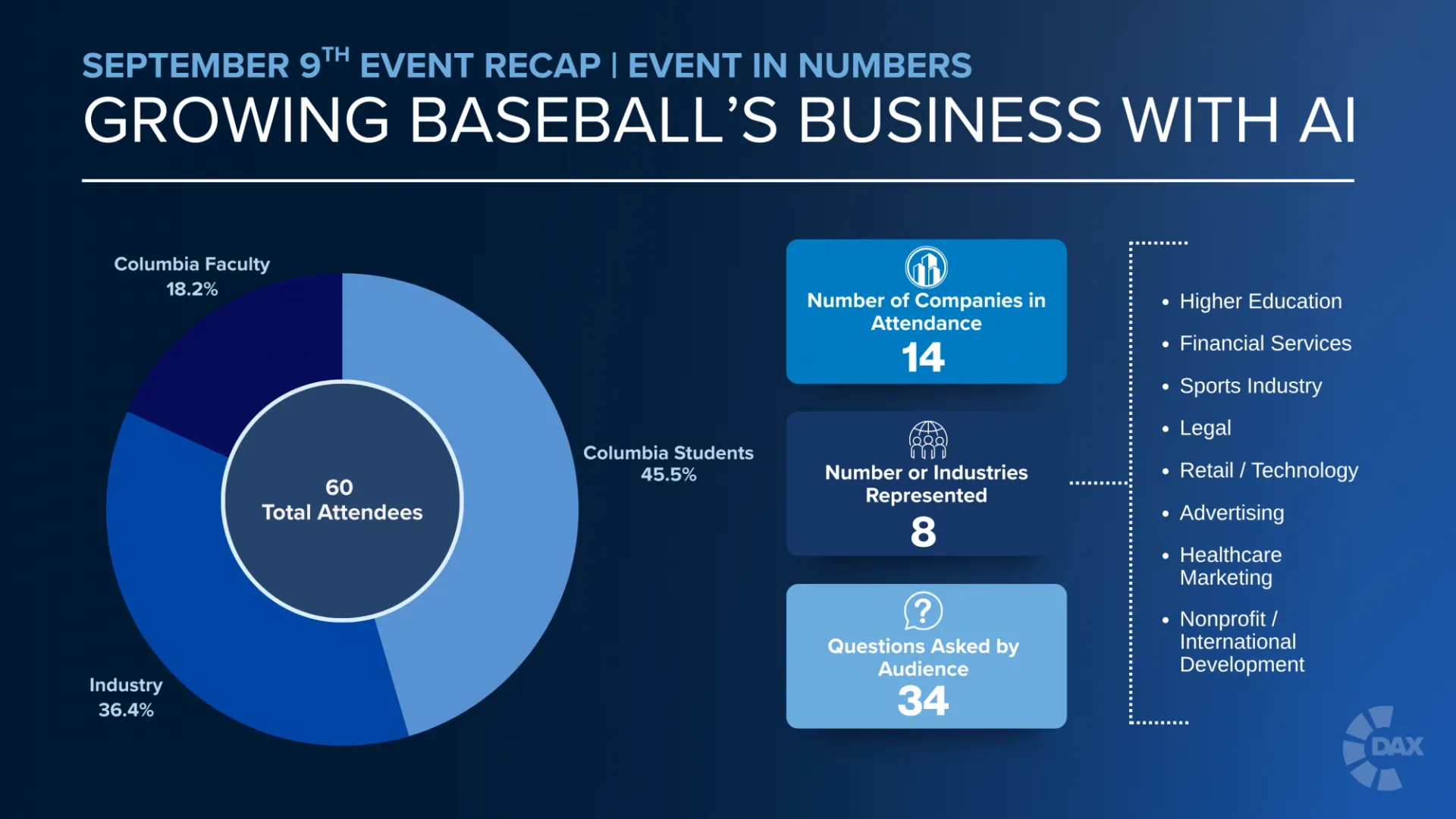
DAX INSIGHTS September 9th Event in Numbers
- 60 attendees, including Columbia students, faculty, alumni, and industry participants
- 34 questions asked by the audience
- 14 companies in attendance
- 8 industries represented, including higher education, financial services, sports industry, legal, retail/technology, advertising, healthcare marketing, and nonprofit/international development
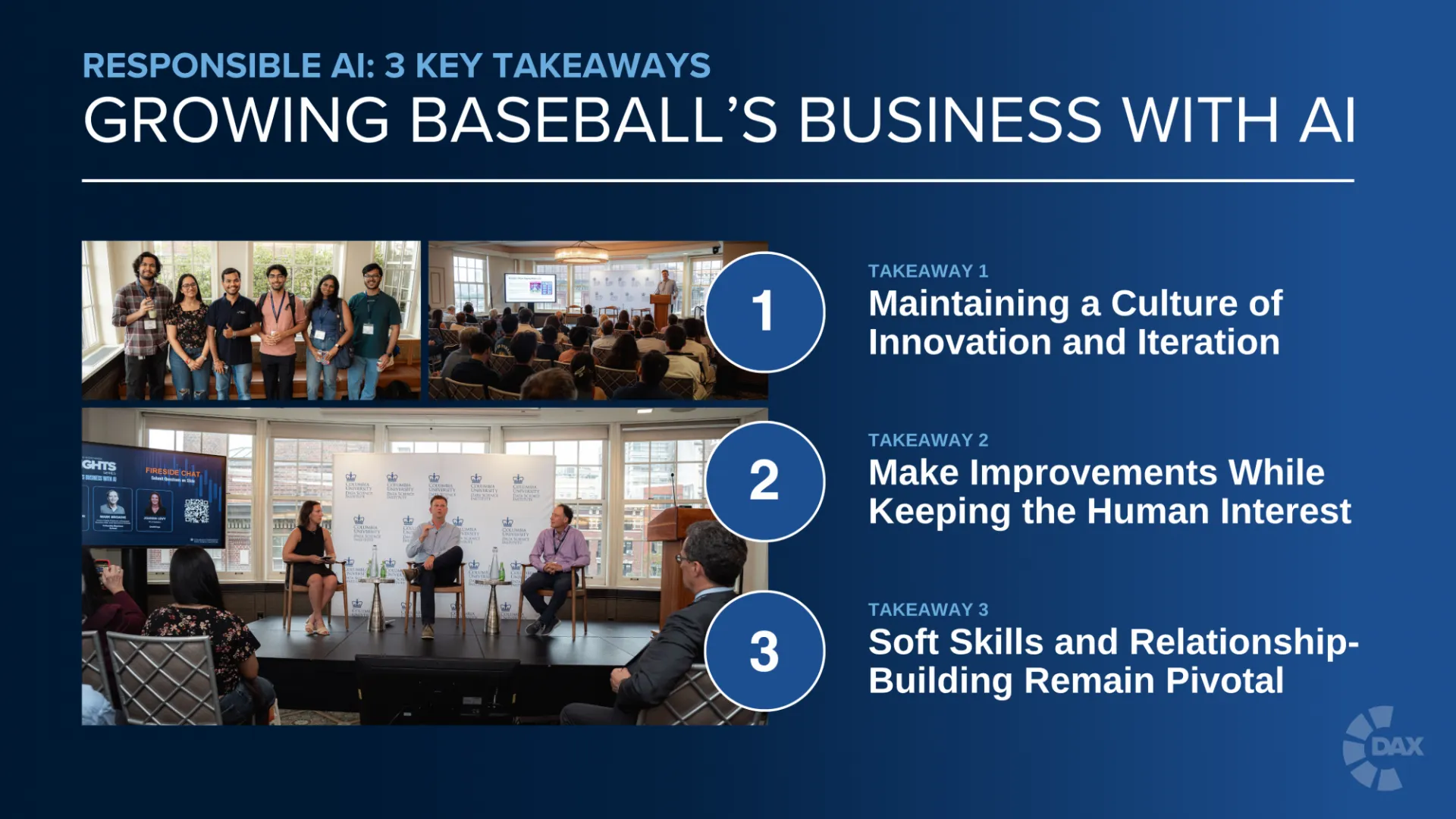
Responsible AI: 3 Key Takeaways
Takeaway 1:
Maintaining a Culture of Innovation and Iteration
“Part of the value of AI to us is being able to test and learn and fail–and fail quickly," Will Edmondson, Senior Vice President of Business Analytics and Operations at Major League Baseball (MLB), said. “Everything's iterative.”
MLB needed actionable insights around why some social media posts performed better than others, and about which players received the most interest on social media. Because MLB and its Clubs across the United States have hundreds of social media accounts posting multiple times a day, the task was daunting without AI. The organization saw an opportunity to build a dedicated AI model with capability to label and track these posts’ performances, saving dozens of hours of labor and enabling MLB to reach actionable insights much faster than if a team member were charged with these time-consuming tasks.
“The first model, we got 70% of the way there, and we felt really good about it. Then we started looking at what the model got wrong, and we realized that there are some pretty obvious issues.” Edmondson explained the model often didn’t have enough context to label their photos. “To try to address this, we updated the model to hook into our baseball stat system.”
The second version of this model was significantly more accurate, and continues to save MLB time and effort so they can share information that resonates most with fans. Edmondson explained that, even before the advent of AI, MLB’s culture embraced the value of constant innovation and testing. Now with AI, they can build and test more efficiently.
Takeaway 2:
Make Improvements While Keeping the Human Interest
Will Edmondson explained that MLB’s approach to AI is to use it to improve existing and imperfect systems, while keeping the elements that fans connect with.
To illustrate this balance, Edmondson shared findings from MLB’s fan research and testing on the Automated Ball-Strike (ABS) system, which is new this season. During testing the system in prior Minor League seasons, fans preferred to keep human umpires, and allow Clubs a limited number of challenges to their calls. Edmondson explained that fans preferred that outcome over using ABS alone, in lieu of a human umpire, because the umpire is an essential element to the baseball audience and to the drama of a game. It was too pivotal to the fan experience to turn over entirely to technology. And as an added benefit, integrating the ABS Challenge system has added a strategic element to Clubs’ game planning.
“Fans don't want to go see a perfectly articulated, perfectly optimized version of baseball. They want to see a human game, and they want to argue with the umpire, and they accept and expect a level of friction,” Edmondson said.
Following Edmondson’s keynote, he was joined by two sports analytics experts for a fireside chat with Mark Broadie, Columbia Carson Family Professor of Business Decision, Risk, and Operations, and Joanna Levy, Vice President of Analytics for DraftKings, who moderated the panel. Levy’s questions focused on the ways AI is being implemented across sports analytics, particularly professional golf, a sport in which professor Broadie has been deeply involved throughout his career. He spoke to how AI is being implemented in that sport.
Broadie echoed Edmondson, saying AI can be used to create and analyze data in new ways, for example, a 3D scan of a golfer’s swing. But he emphasized the enduring need for human expertise and experience. “I can see AI helping coaches in the way that trackplates and videos have helped coaches,” said Broadie. “But I don’t see it replacing coaches.”
Takeaway 3:
Soft Skills and Relationship Building Remain Pivotal
In his keynote and throughout the Q&A portion, Will Edmondson and professor Broadie underscored how crucial soft skills remain in sports analytics. Edmondson explained that while people often ask him questions that could be answered with data, their real question is often deeper, and he has to interpret why they’re posing the question. “Soft skills are underrated,” he said. “Looking someone in the eye, having them trust you. Those are the types of things that I think are incredibly important, and will continue to be in the next few years.”
Edmondson’s message for the students in the audience was to use AI to advance their education, but still put in the work to understand their field. “If you are fast forwarding with an AI-driven solution, and you haven't put in the work to get there, you're going to get a follow-up question that you don’t know how to answer.” He likened school to sports, saying “training and doing the reps and the repetition is hard, but it's supposed to be hard.”
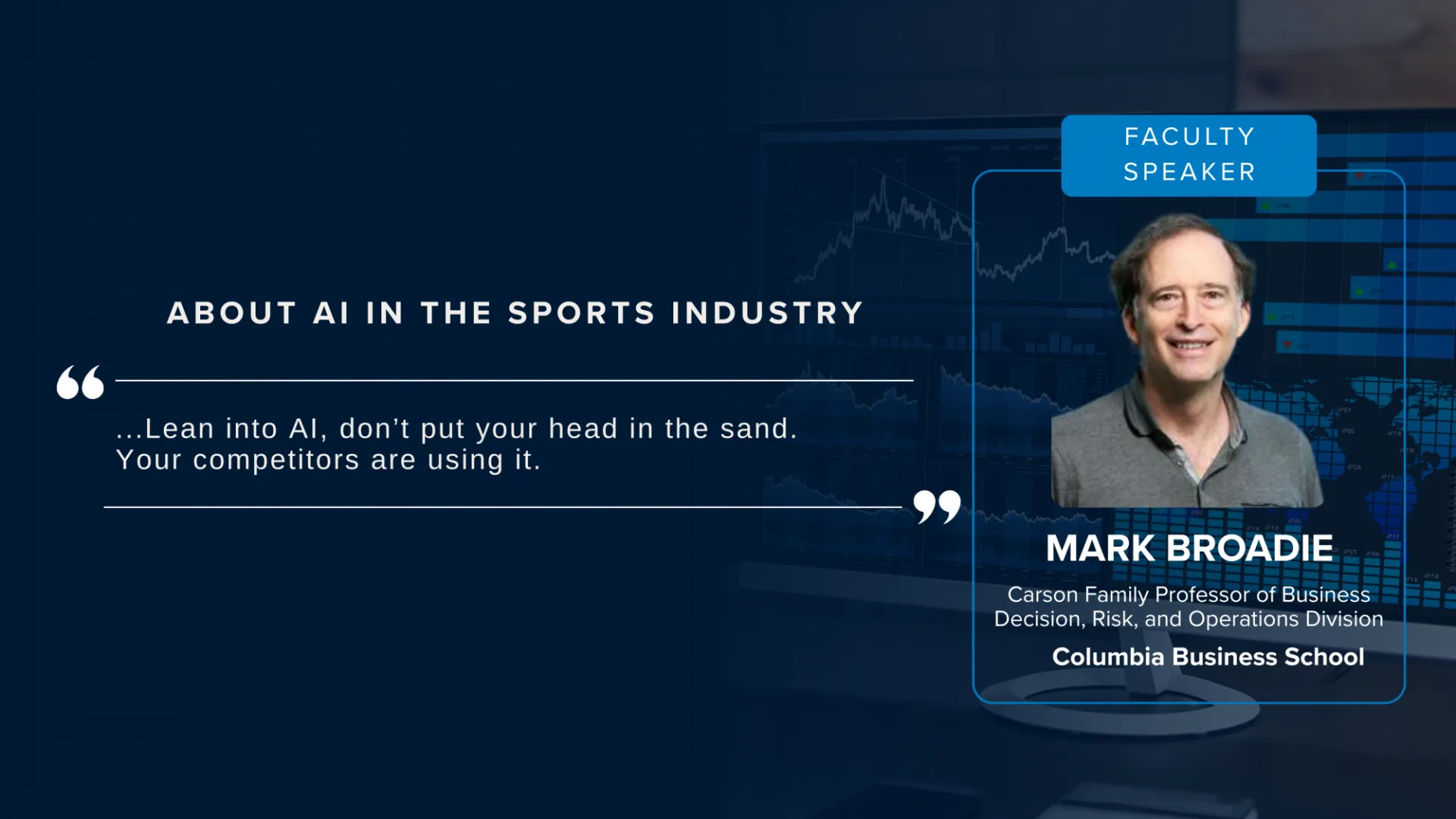
Professor Broadie had a message for the industry and academics in the audience who are tentative about embracing AI. He closed his remarks by encouraging them to “lean into AI, don’t put your head in the sand. Your competitors are using it.”