How to Win Consumer Trust in AI: Post-Event Summary
Prepared by Sascha Brodsky
An AI system can meet business goals and still leave customers worse off.
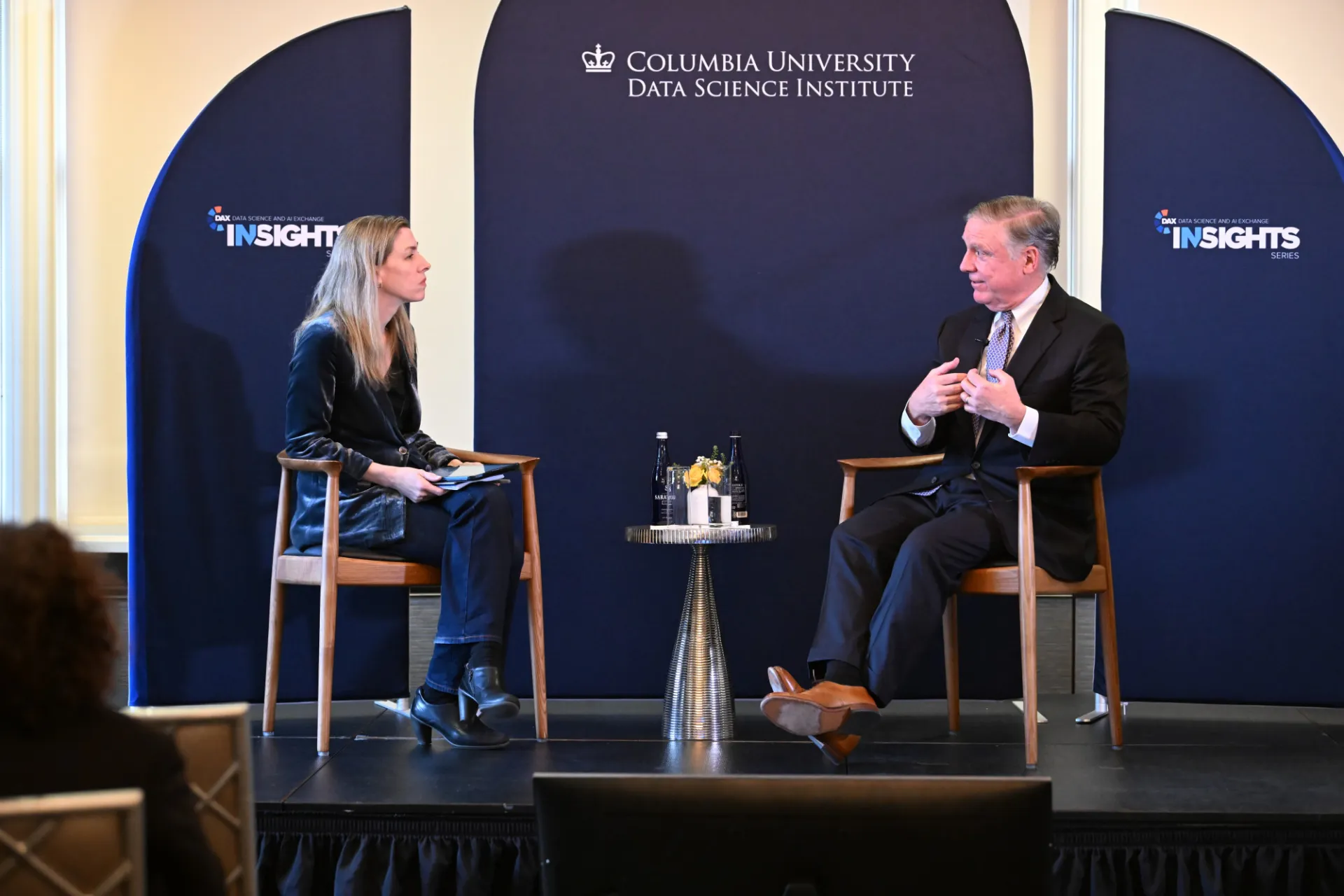
At an October 28 DAX INSIGHTS event hosted by Columbia University's Data Science Institute, former Visa chief data officer Bob Hedges warned that personal information could shape recommendations and prices. In one hypothetical example, a retailer might use knowledge of a shopper's urgent need for a birthday gift to estimate what he would be willing to pay.
“There's been a dangerous erosion of expectations on the part of consumers that they should get a fair deal,” Hedges said.
Journalist Kara Miller, host of the It Turns Out podcast and a Boston Globe columnist, moderated the discussion. The DAX INSIGHTS series brings together industry and academic perspectives on responsible AI.
Image Carousel with 8 slides
A carousel is a rotating set of images. Use the previous and next buttons to change the displayed slide
-
Slide 1: DAX INSIGHTS How to Win Consumer Trust in AI event photo
-
Slide 2: DAX INSIGHTS How to Win Consumer Trust in AI event photo
-
Slide 3: DAX INSIGHTS How to Win Consumer Trust in AI event photo
-
Slide 4: DAX INSIGHTS How to Win Consumer Trust in AI event photo
-
Slide 5: DAX INSIGHTS How to Win Consumer Trust in AI event photo
-
Slide 6: DAX INSIGHTS How to Win Consumer Trust in AI event photo
-
Slide 7: DAX INSIGHTS How to Win Consumer Trust in AI event photo
-
Slide 8: DAX INSIGHTS How to Win Consumer Trust in AI event photo







Responsible AI: 3 Key Takeaways
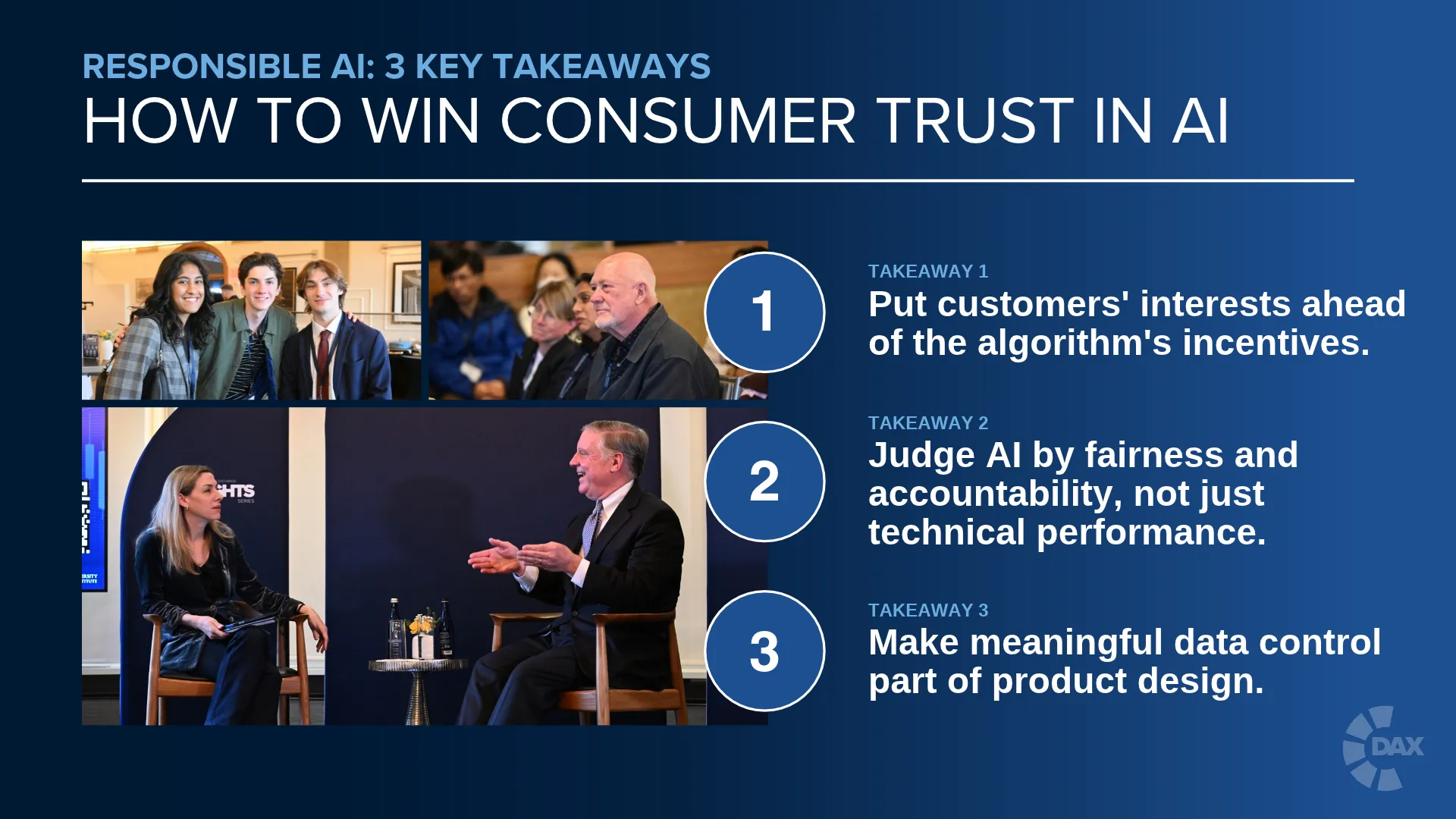
Takeaway 1: Put customers' interests ahead of the algorithm's incentives.
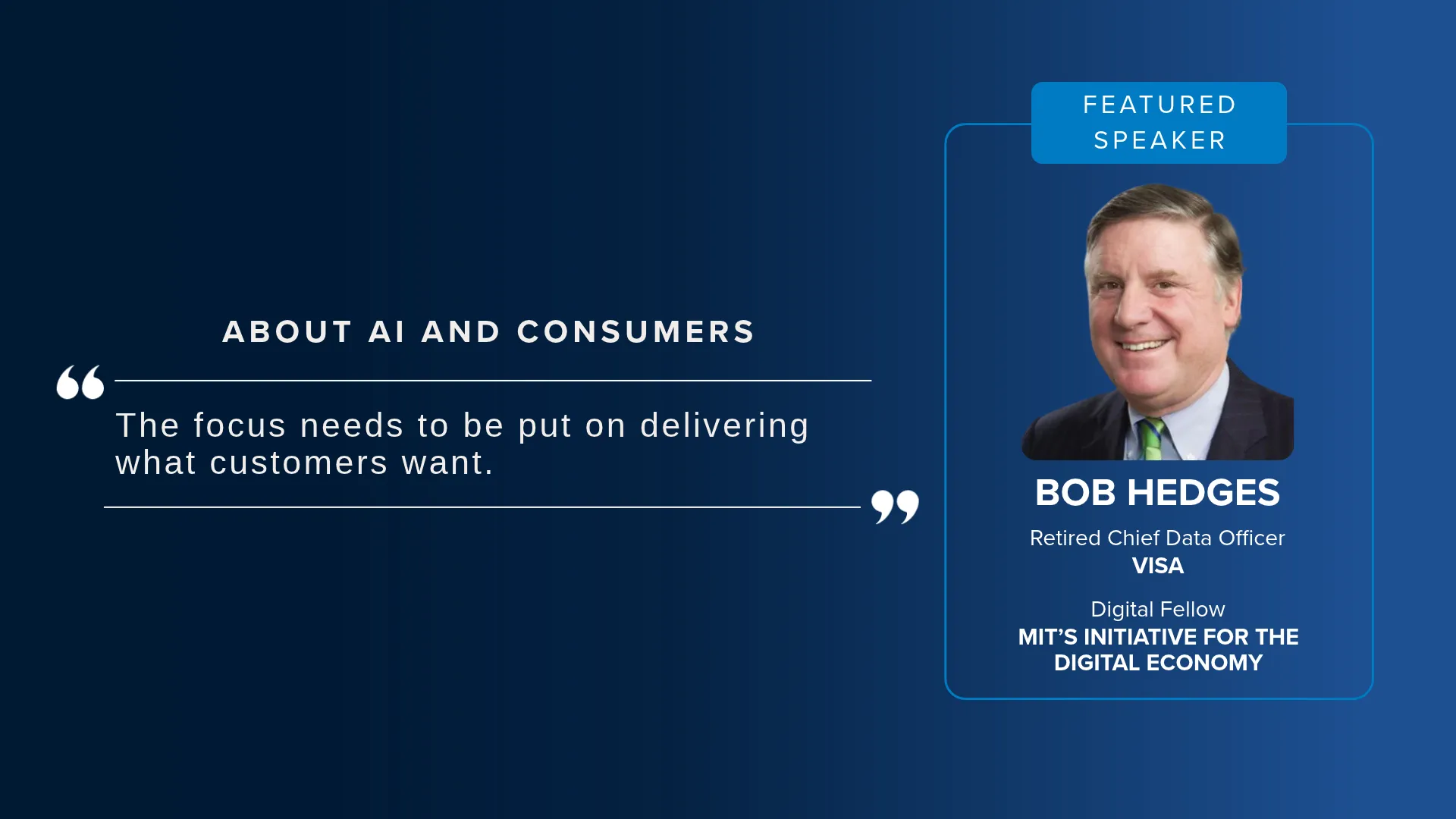
A recommendation system can be accurate in a narrow technical sense yet fail to help customers discover alternatives. Hedges described a restaurant service that repeatedly steered people toward cuisines they already chose, and recounted how marketers proposed giving certain restaurants more prominent placement. For businesses, the lesson is to examine whose interests a recommendation serves, disclose to consumers any paid or preferential placement where applicable, and measure success by long-term customer value rather than clicks or conversions alone. The same scrutiny applies to surveillance pricing: using detailed personal information to estimate what an individual may be willing to pay can undermine trust, even if it raises revenue in the short term.
Takeaway 2: Judge AI by fairness and accountability, not just technical performance.
Hedges pointed to banks that arranged transaction orders in ways that could increase overdraft fees. The systems worked as intended, but the bank's financial benefit came at customers' expense. For organizations deploying AI, technical indicators such as uptime and response speed therefore cannot be the only measures of success. Hedges proposed five tests: transparency, straightforwardness, control, a fair deal and accountability. Companies should ask whether their customers understand the decisions affecting them, can challenge outcomes, and have a meaningful way to seek redress.

Takeaway 3: Make meaningful data control part of product design.
Privacy policies do little on their own if customers cannot see, limit, or revoke access to their information. Hedges cited services that flag problematic online terms and manipulative interfaces, along with Chase's Data Security Center, which allows customers to review connections to outside apps and manage financial-data sharing. In a demonstration by Inrupt, an AI assistant offered financial guidance after Inrupt's software removed identifying account details before sending information to a third-party AI model. The lesson for industry is practical: minimize unnecessary data collection, explain why information is needed and give customers usable controls before trust breaks down.
In recorded remarks, Columbia Business School’s vice dean for research Oded Netzer outlined research at Columbia on AI reliability, consumer behavior and fairness.
For businesses, the question is also financial. An AI system that increases revenue from individual transactions may prove costly if customers lose confidence, take their business elsewhere or stop using the service. Companies also risk missing the expected return on their AI investments if customers are unwilling to use the systems or share the information they require. Those longer-term costs deserve consideration alongside short-term gains in fees or sales.
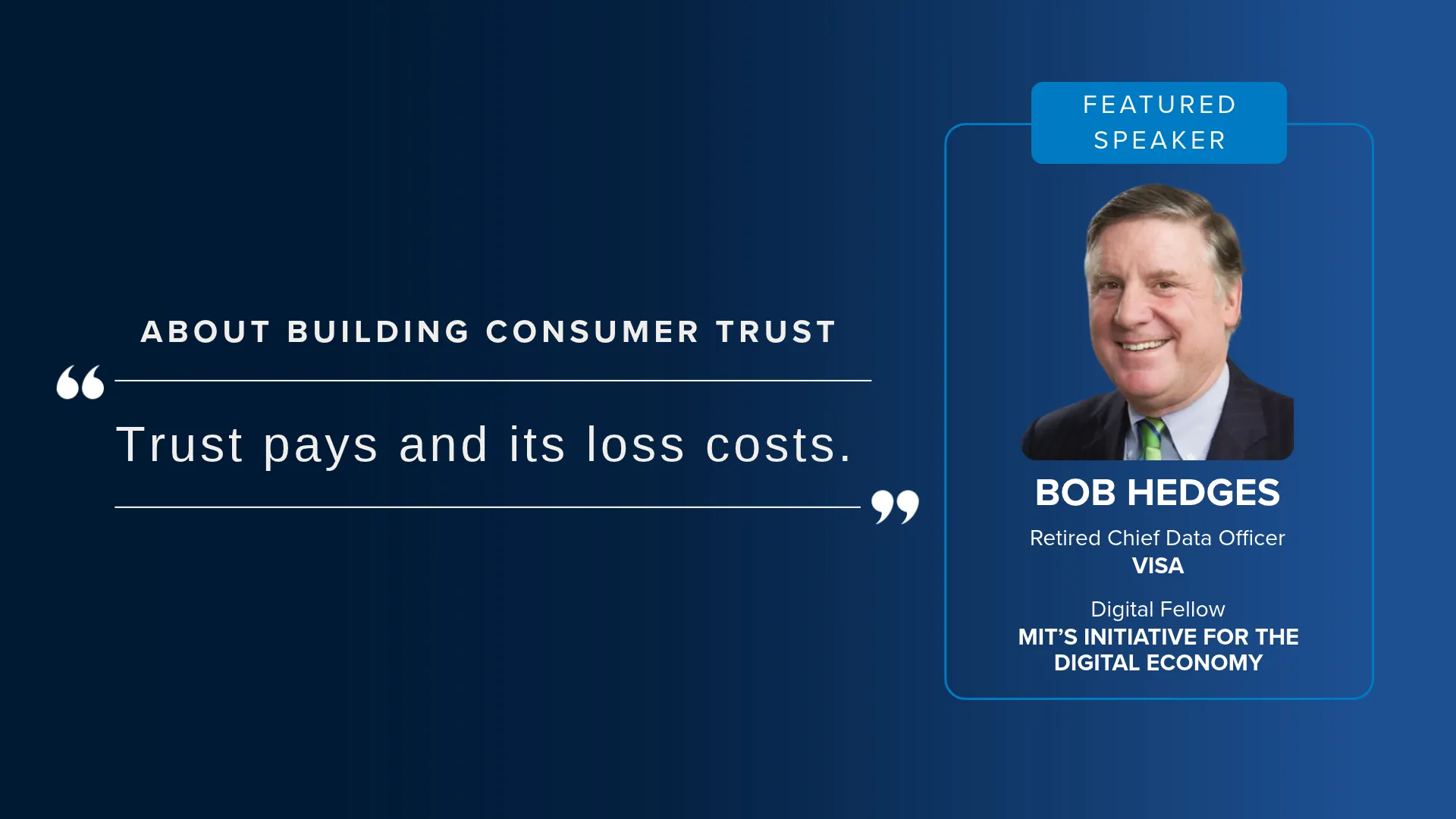
Hedges urged businesses to protect consumers even when doing so might reduce short-term revenue. “Trust pays and its loss costs,” he said.