What AI Knows About You May Change What You Pay

A restaurant recommendation system kept suggesting Chinese restaurants to diners who already ate Chinese food often. A subsequent proposal to give certain restaurants more prominent placement raised another concern: the system might steer diners toward businesses favored by marketers rather than broaden their choices.
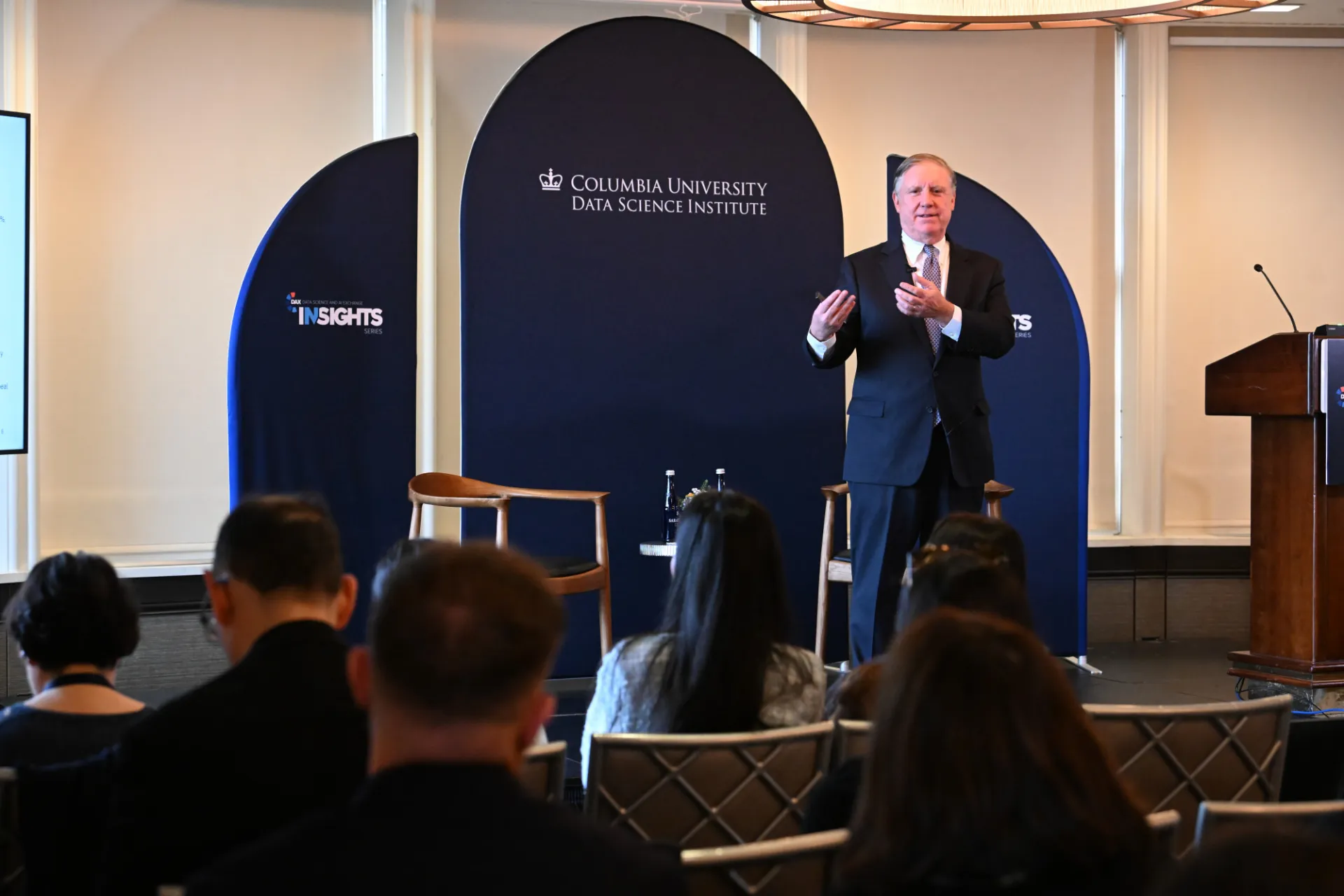
Bob Hedges, Visa's former chief data officer, shared this scenario at an October 28 discussion hosted by Columbia University's Data Science Institute. It illustrates a growing problem for businesses using AI. The data that helps companies anticipate what customers want can also determine which product and service options they see—or what prices they are offered—without their knowledge. Without knowing whose interests shape a recommendation or a price, consumers may have little way to tell whether the system is working for them—or against them.
“The focus needs to be put on delivering what customers want,” Hedges said.
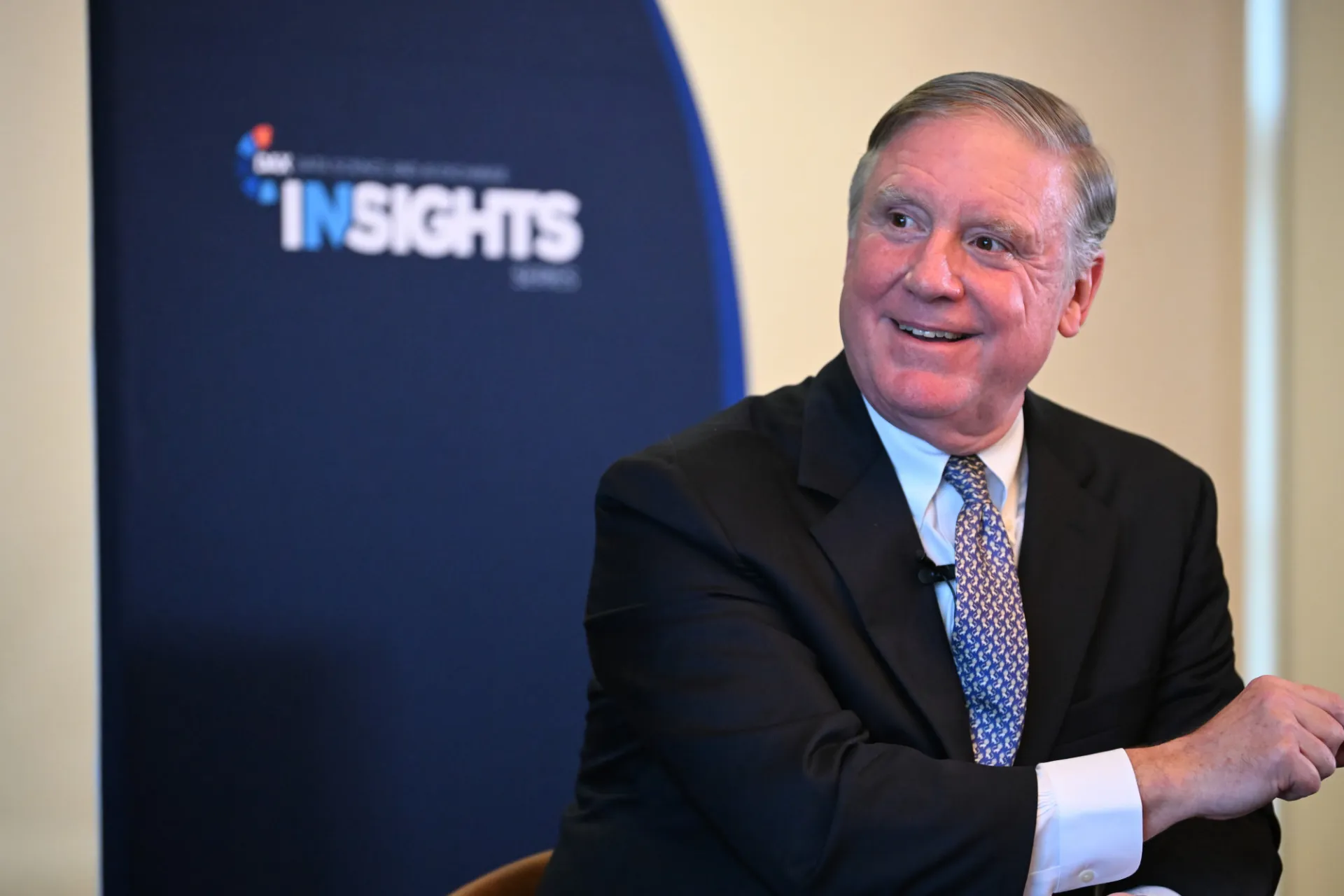
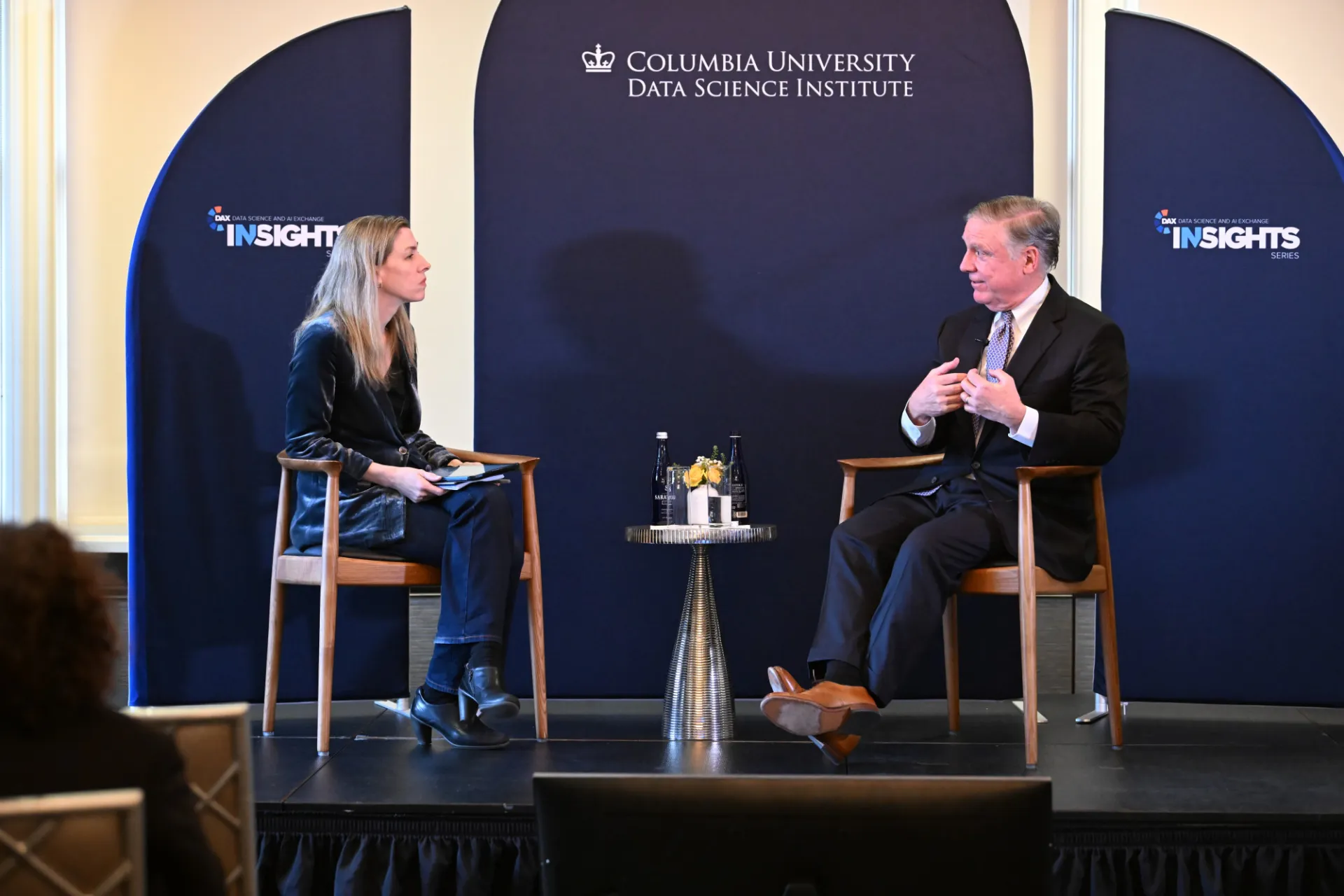
Hedges, now a digital fellow at MIT's Initiative for the Digital Economy, spoke with journalist Kara Miller at the Data Science Institute's DAX INSIGHTS event, How to Win Consumer Trust in AI.
What a birthday can tell a retailer
Imagine a man shopping for his wife's birthday present shortly before the big day. In Hedges' hypothetical example, a retailer might know her birthday, see that he had made no substantial purchases in recent weeks and even have access to a message identifying the gift she actually wanted. Those data points could reveal how urgently he needed to buy the gift.
Such details could help a retailer estimate what the shopper would be willing to pay. This is the logic of surveillance pricing: using personal data or inferences about a consumer to help determine the price that person sees. Unlike broad market price changes driven by supply and demand, Hedges' hypothetical scenario hinged on a seller's unusually detailed knowledge of one customer's circumstances. The shopper might never know which details influenced the offer.
The issue has reached Congress. Hedges testified on August 4 before a US Senate Judiciary Committee subcommittee on surveillance pricing. He told the Columbia audience that members of both political parties were concerned and well-informed on the issue, but doubted that most shoppers understood how the practice actually affects them.
During the conversation, Miller questioned whether consumers already understood the bargain. They knew online services collected personal information, she suggested, yet continued using them. Perhaps convenience outweighed their objections.
In Hedges' view, the greater issue was the decline in what consumers expected from companies.
“There's been a dangerous erosion of expectations on the part of consumers that they should get a fair deal. Unfortunately, many consumers are almost resigned to the idea that the digital marketplace takes advantage of them,” he said.
Privacy policies alone were not enough, he argued. Shoppers should know why they were seeing a particular price or recommendation and be able to decide how their information is used.
The overdraft lesson
Banks were using algorithms to make money from customers long before generative AI entered the picture.
Hedges recalled how in the 2000s some banks sequenced checks and debit transactions to maximize overdraft revenues. Consider an account with $100 and five payments pending: one for $95, the other four for $10. Process the $95 payment first, and the next four payments will incur fees. Process the smaller ones first, and only the last payment overdraws the account.
The industry called the practice “payment-posting order optimization.” It generated income for banks but eventually brought public criticism and lawsuits. Consumers had not chosen the order of those transactions; the process was opaque; yet they bore the cost.
The payment posting system would operate exactly as designed and leave customers worse off. Hedges drew a parallel with how consumers are experiencing AI: Technical metrics such as uptime and millisecond response speed reveal little about whether customers are being treated fairly or whether financial incentives influence recommendations.
Hedges’ five tests for building consumer trust were transparency, straightforwardness, control, a fair deal, and accountability. Customers should know what information a service holds, be able to change their minds about sharing it, and have some recourse when things go wrong.
Asked whether consumers could regain control over data already in circulation, Hedges pointed to an earlier emphasis on transparency in corporate data practices. He argued that businesses could return to clearer disclosure, deleting unneeded information, and collecting less of it.
What customers could actually control
The alternatives Hedges described were not all theoretical. Some were already available; others were being built.
Terms of Service; Didn't Read reviews privacy policies and online terms, flagging provisions users might miss. FairPatterns develops tools to detect manipulative design in websites and apps. Hedges also cited Chase's Data Security Center, which began a phased rollout in September 2026 and lets customers review connected apps and manage permission to share financial information.
A demonstration from Inrupt, co-founded by World Wide Web inventor Tim Berners-Lee, showed another possibility. In the hypothetical scenario, a prospective homebuyer used an AI assistant for financial advice. Before passing information to the AI model, the software stripped out account identifiers and obscured financial figures. The customer controlled when to share their actual records and identifying information. The demonstration showed how personalized advice could work without giving AI providers unrestricted access to financial data.
“We should not allow the LLMs to tell us what to do,” Hedges said, referring to the large language models behind chatbots. “We should be telling the LLMs what we want them to do.”
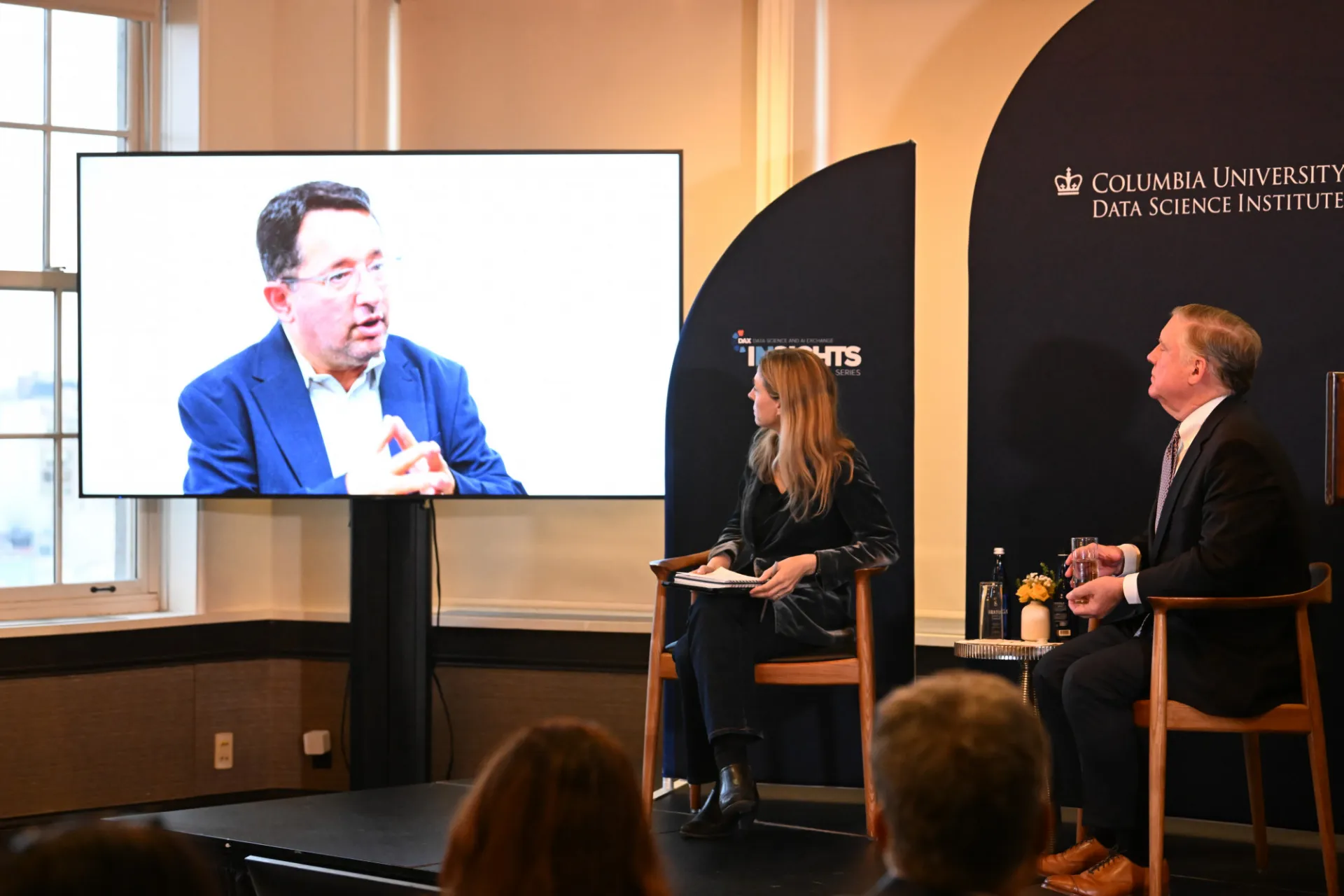
Across Columbia, researchers are studying AI reliability, consumer behavior, algorithmic fairness and legal questions about regulation, said Professor Oded Netzer, Columbia Business School's vice dean for research, in recorded remarks. He argued that universities are well placed to tackle trust problems in AI that cross disciplinary boundaries.
In his closing remarks, Hedges called for greater public awareness of AI-related harms and a stronger ethical commitment from professionals who work with data, likening it to the Hippocratic oath in medicine. He urged companies to build trust into products from the start, give consumers greater control, and proactively engage with policymakers.
“Trust pays and its loss costs,” he said.
This event was one of a series of nine forums that showcase how AI is being implemented in certain areas across various industries. “AI has applications in nearly every field right now. We’re interested to see how it is being used in sports to help the players and improve the fan experience,” said Lori Glover, Chief of Strategic Alliances at the Data Science Institute (DSI), and host of the DAX INSIGHTS forum. “I hope events like these continue to foster connections between industry and academia by highlighting areas of alignment where expertise, priorities and opportunities intersect.”
Explore the DAX INSIGHTS Series, access full post-event summaries, and register your interest to attend future events at the link below.