The Transformative Potential of "Tech Bono"
Nonprofit organizations have public-interest challenges that require technical expertise. New York is now home to the country's largest concentration of technology talent. What has been missing is a way to connect the two.
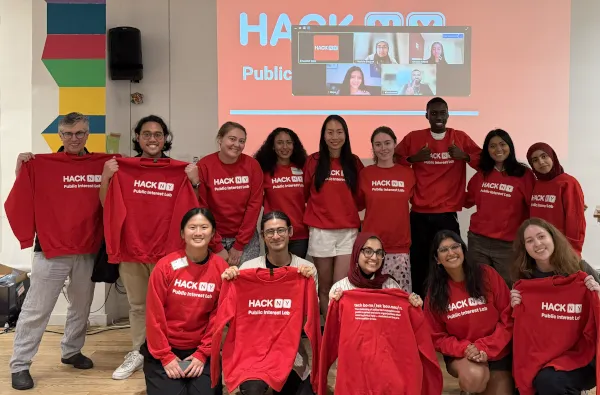
This summer, hackNY - a New York non-profit co-founded in 2010 by DSI Core Member Chris Wiggins - helped bridge that gap by matching six New York nonprofits with student fellows from around the world.
Inspired by the pro bono legal model, for 2026 hackNY reimagined its longstanding Fellows Program to focus on "tech bono," connecting young technologists with organizations working on public-interest problems.
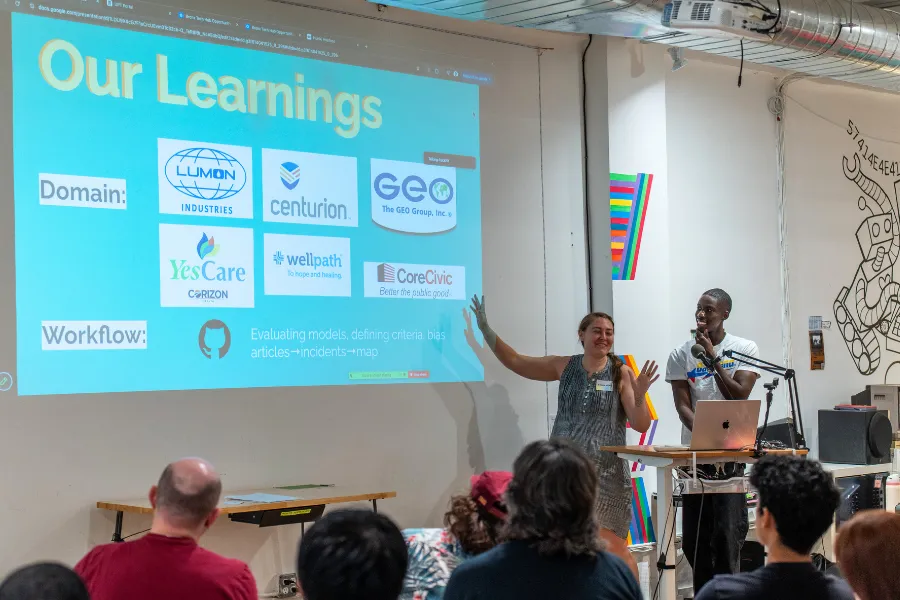
For Columbia University computer science major and student researcher Moustapha Diankha, the opportunity was personal. Because of his family members’ experiences with incarceration and the criminal justice system, he chose to work with Worth Rises, an organization focused on combatting exploitation in the prison industry.
Worth Rises had identified troubling patterns in the ways commercial health care providers responded to the medical needs of incarcerated people, but the organization needed help making this information more accessible to journalists, litigators, and activists. In just a few hours a week, Diankha built a tool for Worth Rises that pulled key information about alleged medical malpractice cases from news stories and plotted them on a digital map. Worth Rises hopes that by making these cases more visible, it can help bring greater attention to sometimes lethal lapses in care for incarcerated people.
The idea of focusing on public interest work was not new to Wiggins when he and his colleagues floated the concept with hackNY's "alumNY" and leadership last February. But the decision to implement it this year was driven, in part, by a set of circumstances similar to those that had inspired the original founding of hackNY in 2010.
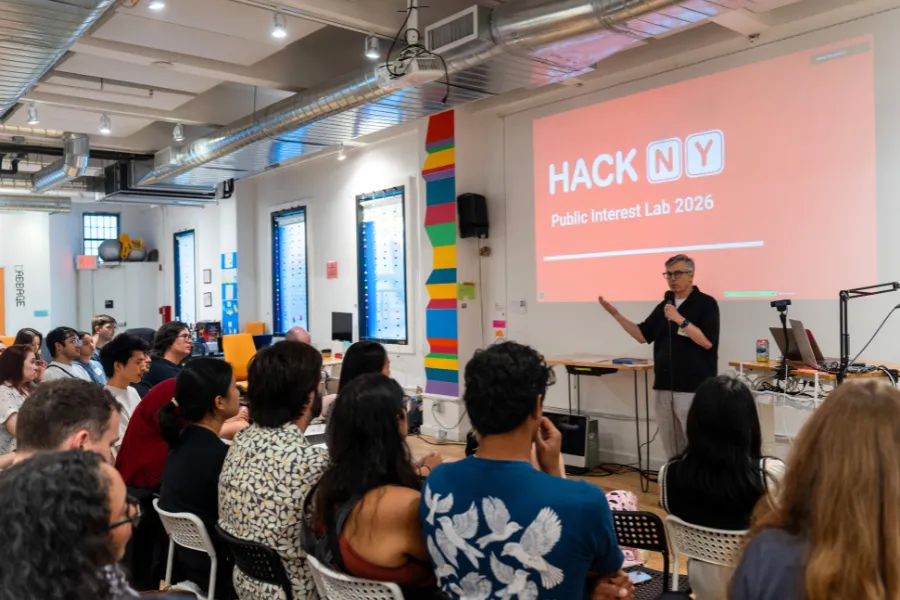
During the 2008 financial crisis, Wiggins saw young people's career prospects collapsing in real time. “A bunch of these talented students that I was teaching had their job offers rescinded,” Wiggins said.
Seeing similarities between that period and the current moment, particularly as artificial intelligence reshapes the entry-level job market,Wiggins saw an opportunity to address both the students’ immediate needs and the deeper needs of the New York City community.
“I think that employers think that AI means you don’t have to hire young people, and so the intern market…just evaporated,” Wiggins said.
It was not only students who benefited from their Public Interest Lab (PIL) work; even more experienced technologists found it changed their outlook.
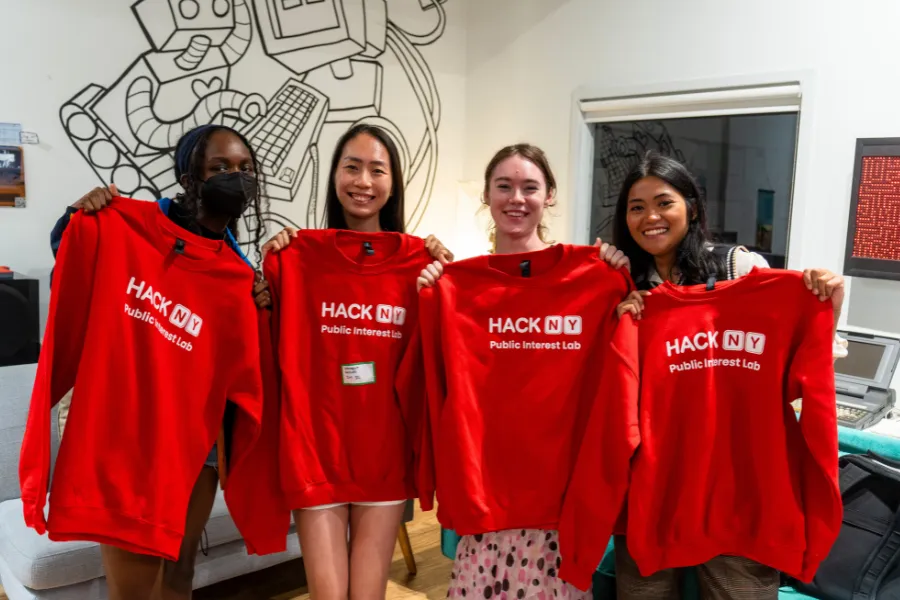
Chiazo Agina, a software engineer at Stripe, mentored PIL fellows Jerica Huang and India Daniel as they worked with Prospect Heights Community Farm to move their member management systems from a basic spreadsheet to a more accessible web-based application where farm members could pay their dues, make requests and track their hours from anywhere. Although the time commitment for Agina was minimal, the experience was transformative for the organization's membership.
“The amount of hours I spent the summer writing code and working on this project is about equivalent to what I've spent on side projects in the past,” Agina said. “Knowing that and seeing the value we brought to the Prospect Heights Community Farm, it does make me feel like I have an appetite to help out more."
While organizing and funding a tech bono program can be challenging, Wiggins confirmed that the team at hackNY is already laying the groundwork for next summer.
For PIL fellows like Daniel, however, there is no need to wait until then. Inspired by her summer work, she has already begun to reach out to more nonprofits to find new ways to volunteer her technical skills for the public good.
Lili Cortes Gutierrez is a 2026-2027 Journalism Fellow with the Data Science Institute.
Editing by Susan E. McGregor.